
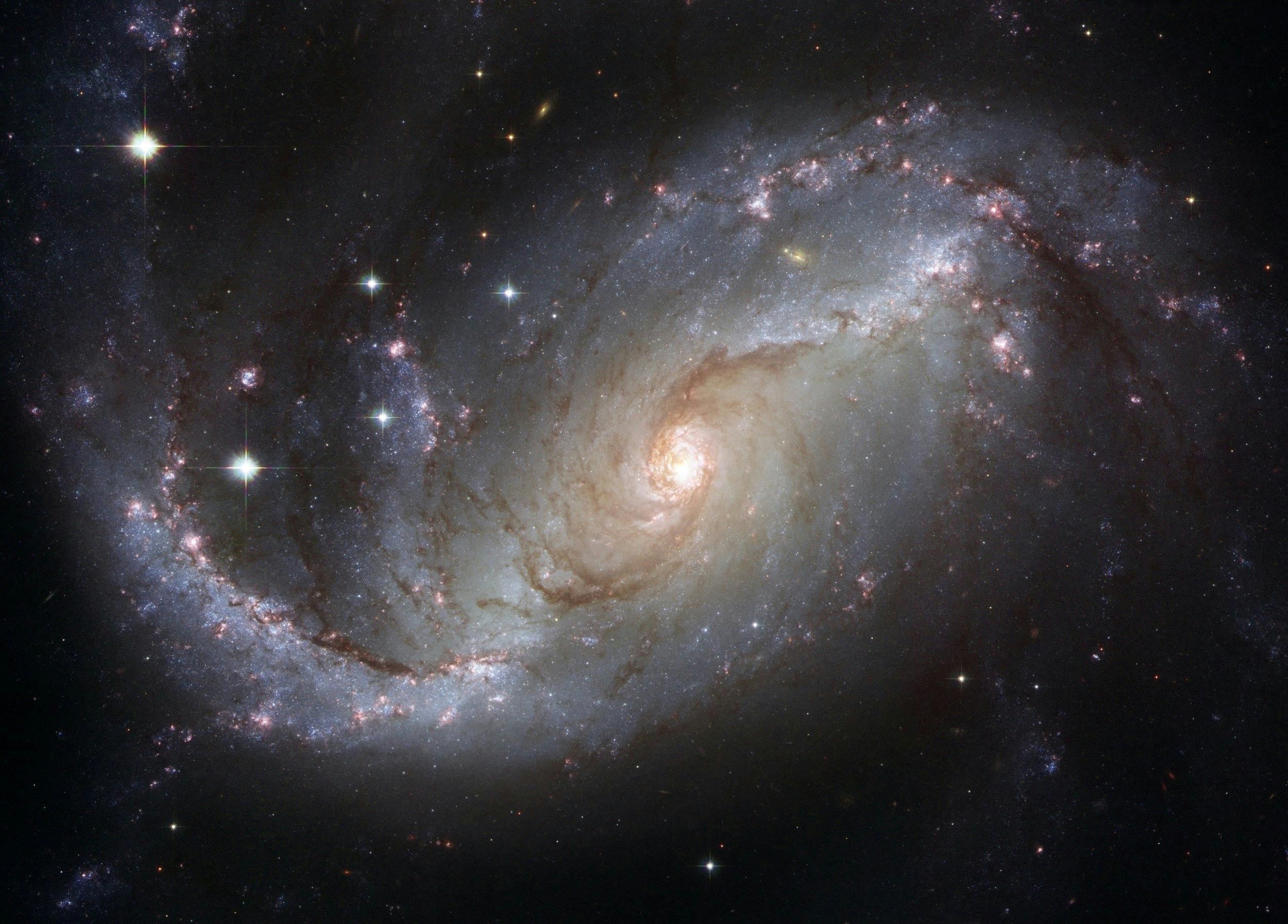
Did the universe have a beginning? That question anchors science, philosophy, and faith because beginnings point to causes. If the universe had a beginning, then it did not explain itself. Instead, it points beyond space, time, matter, and energy—so did the universe have a beginning or not? Below is the clearest lay summary of the evidence.
Why “Did the Universe Have a Beginning?” matters
First, if the universe had a beginning, the cause must be outside spacetime. Moreover, that makes this both a scientific and an apologetics question: observable facts plus logical inference.
One-minute answer: Did the Universe Have a Beginning?
Briefly, multiple independent lines—cosmic expansion, the cosmic microwave background, light-element abundances, entropy, and modern cosmology theorems—converge: the universe is not past-eternal. Therefore, the universe had a beginning.
1) Expansion points backward to a start (Hubble)
What we see: galaxies recede; the farther they are, the faster they move (redshift).
Why it matters: rewind the “cosmic movie” and space contracts toward a hot, dense origin.
Takeaway: Expansion strongly suggests the universe had a beginning.
2) The afterglow of a hot beginning (Cosmic Microwave Background)
What we see: a faint, uniform microwave glow from every direction.
Why it matters: a once-hot, once-dense state left a cooled fingerprint.
Takeaway: The CMB is empirical evidence that the universe had a beginning.
3) Light-element abundances fit a hot start
What we see: a predictable mix of hydrogen, helium, and a trace of lithium.
Why it matters: this “primordial recipe” matches brief, early-universe nucleosynthesis.
Takeaway: Observed abundances align with the universe having a beginning in a hot, dense state.
4) Entropy argues against an infinite past (Second Law)
What we see: usable energy runs down; systems drift toward disorder.
Why it matters: with an eternal past, we should already be at heat death—but we aren’t.
Takeaway: The Second Law fits best if the universe had a beginning.
5) Modern theorems say no to past-eternal expansion (Borde–Guth–Vilenkin)
What they show: any universe with a positive average expansion (including inflation) cannot be extended infinitely into the past.
Why it matters: this is model-independent and applies broadly.
Takeaway: Even clever inflationary models still imply the universe had a beginning.
“But what about…?” common alternatives
Cyclic universes (bang–crunch–bang)
However, cycles accumulate entropy and typically still lead to a beginning when traced back mathematically.
Pre-Big-Bang “bounce” ideas
Similarly, bounce models struggle with entropy reset, fine-tuning, and often run into the same “no past eternity” constraints.
“Quantum nothing” creation
Importantly, in physics “nothing” usually means a quantum vacuum—still something with laws and fields. Consequently, the question shifts to why that “something” exists.
Circular or emergent time
Admittedly intriguing, these proposals lack the multi-line empirical support that favors the universe having a beginning.
A simple philosophical cross-check
Furthermore, actual infinites in the physical world generate paradoxes. Thus, an actually infinite past is problematic; a finite past avoids those issues and harmonizes with the scientific evidence.
So what follows if the universe had a beginning?
If the universe had a beginning, the cause would be:
- Beyond space and time (since spacetime began),
- Immaterial and immensely powerful (ground of all matter and energy),
- Able to choose (a contingent, not inevitable, beginning).
Therefore, the features coherently fit a personal, theistic cause. Science can’t name the cause by method, yet the data are consistent with a transcendent Creator.
Bottom line: Did the Universe Have a Beginning?
From expansion to afterglow, from elemental recipes to entropy and cutting-edge theorems, the strongest, simplest reading is clear: the universe had a beginning. And if it began, it is not self-explaining—which opens the door to a transcendent cause.
Read about human dignity here.


